Lawn Mowing Services in London

Our lawn mowing services in London are designed to keep domestic and commercial grass areas tidy, even, and ready to use. We focus on regular grass cutting, careful edging, and a neat finish that supports the overall look of gardens, front lawns, shared outdoor spaces, and smaller green areas. If you want a reliable way to keep on top of lawn care without letting the grass get out of hand, this service offers a practical place to start.
We can also support wider garden upkeep where mowing sits alongside other routine tasks. For customers who want a broader seasonal tidy, our work can sit comfortably next to garden maintenance and straightforward grass cutting service options. These related services help keep the lawn area consistent rather than treating mowing as a one-off job that is soon undone by edging, trimming, or untidy borders.
To request a quotation, send us the basics of the lawn area you need looked after and the kind of finish you want. A clear description is often enough to begin, and if you already have a preferred schedule, you can mention that too. For a fuller overview of how we handle pricing and enquiries, see our pricing and quotes page and then get in touch when you are ready.
Regular mowing and lawn care
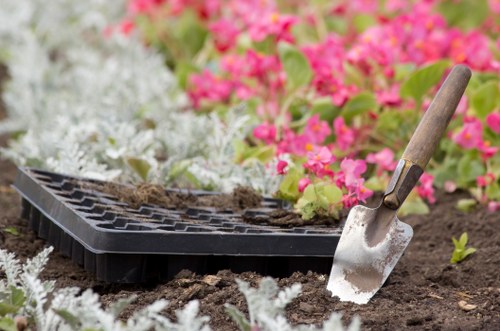
Regular mowing is usually the most effective way to keep grass healthy-looking and manageable. Cutting too much at once can leave a lawn stressed and uneven, while leaving it too long can make the surface look patchy and more difficult to maintain. We therefore work with the condition of the lawn in mind, aiming for a tidy cut that suits the current growth rather than forcing an overly short finish. The result is a cleaner appearance with less strain on the turf.
Good mowing is rarely just about the machine pass itself. It also involves sensible edging, attention around borders, and care near planted areas, paths, and fences. Where useful, we can combine mowing with practical garden services or broader gardening services, so the lawn does not stand out from the rest of the outside space. If you are managing a front garden, rear lawn, or a shared patch, consistency is often what makes the difference.
For many customers, the aim is not simply a shorter lawn but a better balance between appearance and maintenance effort. That might mean one-off mowing before an event, or a repeating pattern that keeps growth under control through the main season. Either way, we keep the approach straightforward and practical, with an emphasis on a clean, even cut and an orderly finish that helps the whole garden feel cared for.
What our mowing work can include
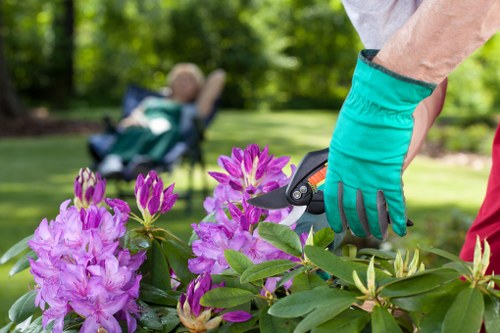
Our lawn mowing work can be shaped around the condition of the grass and the layout of the space. In many cases this includes a full cut, edging along paths or borders, trimming difficult spots, and removal of loose clippings where that is appropriate. Some lawns need a simple tidy; others benefit from a more detailed pass that makes the edges look sharper and the lawn easier to manage next time.
Where the garden needs more than mowing, related services may be useful before or after the cut. We can support heavier tidy-ups through garden clearance or help with overgrown boundaries using hedge trimming. These tasks are often linked in real gardens: once the hedge, path edges, and unused growth are brought back under control, the lawn itself becomes much easier to keep in good order.
It can also help to think in terms of the lawn’s condition as well as its size. A flat, open lawn is different from a space with steps, uneven access, narrow strips, or borders that need extra care. We work with that in mind so the mowing is practical rather than rushed. Where appropriate, we can discuss whether a tidy, regular cut or a more detailed first visit is the better starting point for the grass you have.
Why many customers choose a planned mowing routine
Grass generally responds best to steady maintenance rather than occasional heavy cutting. A planned mowing routine helps the lawn stay manageable, keeps the visual finish more consistent, and reduces the feeling that the garden has become a larger job than it really needs to be. For many properties, the right timing is more useful than an occasional intensive visit, especially when the grass grows quickly in warmer weather.
If you are deciding between a one-off visit and an ongoing arrangement, it can help to think about how the lawn is used. Areas that see foot traffic, children playing, or frequent access from paths and patio doors often benefit from a reliable schedule. In those settings, mowing becomes part of keeping the whole outside space presentable, rather than a separate chore to tackle only when the grass is already long.
Useful points to share when asking for a quotation: the approximate lawn size, whether the grass is currently short or overgrown, whether there are slopes or awkward edges, and whether you want a single visit or recurring mowing. A little detail helps us suggest the most sensible approach without overcomplicating the enquiry. If you are comparing options, a clear description of the lawn usually matters more than a long explanation.
Supporting related garden work

Some customers want mowing as the main task, while others prefer a broader tidy across the garden. In those cases, we can discuss services that support the lawn rather than compete with it, such as garden maintenance, gardener services, or more general local gardener support. These pages reflect the broader kind of work that may sit alongside mowing when a property needs regular attention.
Where the lawn is only one part of a more mixed outdoor area, it can be useful to combine grass cutting with other tasks from time to time. For example, a garden may benefit from landscape gardening if the layout itself needs improvement, or from landscaping where existing features need a more structured finish. Those services are different from simple mowing, but they can help when the garden needs a more comprehensive reset.
We keep the focus on practical results: a lawn that is cut neatly, edges that look cared for, and a garden that feels easier to manage. Not every space needs a major change. In many cases, steady mowing and a few well-chosen supporting tasks are enough to make the outside area feel much more orderly without overworking it or changing it beyond recognition.
About London
London is a large and layered city whose identity has been shaped by centuries of settlement, trade, government, and continual reinvention. The River Thames remains one of its defining features, curving through the centre and linking districts that developed at different times and for different purposes. Historic areas sit alongside newer commercial quarters, while residential neighbourhoods range from dense inner districts to quieter outer suburbs. This variety is visible in the city’s street patterns, terraces, squares, railway corridors, and surviving open spaces. Many parts of London still reflect earlier phases of growth, from medieval lanes and Georgian town planning to Victorian engineering and twentieth-century rebuilding. Its landmarks are similarly varied: the Palace of Westminster, St Paul’s Cathedral, the Tower of London, and numerous museums and galleries all sit within a wider urban fabric that changes from one borough to the next. Parks and commons such as Hyde Park, Hampstead Heath, Richmond Park, Greenwich Park, and countless smaller green spaces provide contrast to the built environment and remain important parts of daily life. London’s cultural character is equally broad, with theatres, markets, music venues, places of worship, and community institutions spread across its districts. Transport also shapes the city strongly, with Underground lines, mainline stations, buses, river crossings, and cycling routes connecting places that can feel very different in scale and atmosphere. Even within central areas, there are sharp contrasts between business districts, shopping streets, conservation areas, and quieter residential pockets. That mix gives London a sense of constant movement while still preserving distinctive local identities in places that have their own histories, landmarks, and patterns of everyday use.
Tailoring the cut to the lawn
Different lawns need different handling, and a sensible mowing service should respect that. Newly established grass often benefits from a careful first cut, while more mature lawns may need attention to thickness, seasonal growth, and edge definition. A flat lawn with clear borders is not the same as a garden where the grass grows close to trees, steps, or narrow side runs. The more accurately the task is matched to the surface, the neater the outcome tends to be.
We also recognise that some customers want mowing as part of a larger sequence of outdoor improvements. Where the grass is damaged, uneven, or overshadowed by other issues, the service may sit alongside lawn turf installation or even wider garden fence installation work if the overall garden arrangement is changing. Those are not the same as mowing, but they are relevant when the lawn is being brought back into a more usable condition.
Shorter grass is not always the best answer; the aim is a healthy-looking finish that suits the site. A balanced cut can help preserve the lawn’s appearance without making it look scalped or stressed. That is why we look at the state of the grass before deciding how to approach the work, especially on first visits or after a long gap between cuts.
One-off and recurring lawn mowing

Some enquiries are for a single visit before a gathering, property handover, or seasonal tidy-up. Others are for recurring grass cutting that keeps the lawn in shape over time. Both approaches have their place. A one-off cut can be helpful when growth has been allowed to run on, while repeated mowing usually brings the most consistent visual result and makes the garden easier to keep on top of between visits.
If you are considering a repeating arrangement, it is worth thinking about the pace of growth and the level of finish you want. A lawn that is looked after at sensible intervals generally needs less recovery work than one that is cut only after it becomes long and coarse. For customers who like a more polished outdoor setting, mowing can also be paired with selective help from garden maintenance so the rest of the space stays in step with the grass.
When you are ready to request a quotation, you do not need to overstate the job. A plain description of the lawn, access, and any extra edges is usually enough to begin. If you prefer, you can also mention whether you want the work done as a recurring visit or as a one-off. That lets us respond with a quote that is relevant to the actual task rather than a generic estimate.
Supporting outdoor presentation
Well-cut grass does a great deal for the appearance of a property, especially when the lawn forms the main open part of the garden. It creates a cleaner frame for planting, paths, paving, and seating areas, and it helps the rest of the outside space feel intentional. For some customers, that is the main reason they look for mowing support: not to change the garden, but to make its current layout look cared for and presentable.
Where the wider space is also in need of attention, related work such as patio cleaning or jet washing can be useful alongside grass cutting. These services do different jobs, yet they often work well together when the aim is a brighter, tidier outdoor area. A neat lawn paired with clean hard landscaping usually gives a stronger overall finish than one good element on its own.
If your lawn is close to shrubs, fencing, or taller growth, it may also benefit from complementary services like garden fence replacement or garden fencing where boundaries are part of the wider presentation. We do not treat mowing in isolation when the whole garden would benefit from a more joined-up approach. The point is to keep the practical work aligned with the shape and use of the space.
Getting a quotation for mowing
Quotation requests are easiest to handle when they are clear and focused. Please tell us what kind of lawn you have, whether the grass is currently short, moderate, or overgrown, and whether you need a single visit or regular mowing. If there are awkward sections, narrow entrances, or additional areas such as front strips or side runs, that is helpful too. The more accurate the outline, the more relevant the response is likely to be.
It can also help to group related tasks together if you already know the garden needs a little more than mowing alone. For example, some customers combine mowing with hedge work, clearance, or general tidying so the garden is looked after in one organised request rather than in separate stages. If you want to explore those options, our garden services page is a good place to start before sending an enquiry.
For the next step, use the contact us page to send your details and ask for a quotation. If you would like to read more about how enquiries are handled, the about us page and the pricing and quotes page both offer useful supporting information. We will then be able to look at the work in a straightforward way and respond with a practical quotation.