Health and Safety Policy for Lawn Mowing Services
 Purpose: This health and safety statement sets out the commitment of our lawn mowing services operations to protect employees, clients, visitors and members of the public. It outlines the standards and safe systems of work used for lawn mowing, grass cutting and associated lawn care services. The aim is to prevent harm by identifying hazards, assessing risks and applying appropriate controls while delivering a reliable garden mowing or yard maintenance service.
Scope and responsibilities
All personnel involved in the grass cutting and turf care operation must understand their responsibilities. Managers shall ensure that risk assessments are completed and that safe working methods are in place. Operatives are responsible for following instructions, using issued personal protective equipment (PPE) and reporting hazards. The policy applies to every lawn mowing service activity including trailer loading, equipment maintenance and the use of powered tools.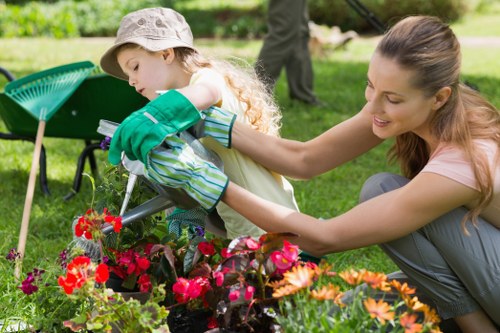
Principles of risk control
Risk control follows the hierarchy: eliminate hazards where possible; substitute or isolate risks; implement engineering controls; apply administrative controls; and provide PPE. For example, scheduling sod-cutting or hedge-trimming to avoid peak pedestrian times reduces public exposure. Regular inspection of walkways and hazard signage helps mitigate slips, trips and falls during grass maintenance.Equipment and machinery safety must be a priority. All mowers, ride-on units and trimmers will be maintained to a safe standard with documented checks before use. Only trained operators will start complex machinery. Fuel handling follows secure procedures to prevent spillage and potential fire. Guards and safety stops are to remain fitted and functional, and defective units are taken out of service until repaired.
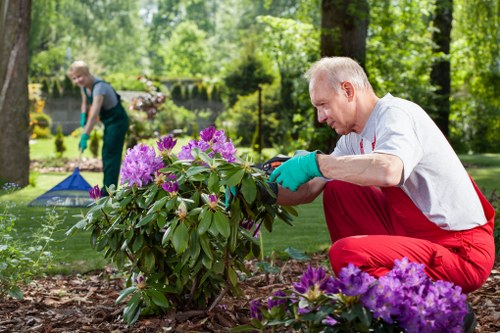 Manual handling and ergonomics are addressed through training and the use of mechanical aids where feasible. Lifting heavy rollers, bags of soil or engine components is planned to minimize repetitive strain. Workers are encouraged to adopt safe postures and rotate tasks to reduce the likelihood of musculoskeletal injuries while performing yard maintenance or garden mowing tasks.
Personal protective equipment is provided for all relevant tasks: sturdy footwear, eye protection, hearing protection, gloves and hi-visibility clothing. PPE choices reflect the nature of the work: ear defenders for prolonged mower operation, cut-resistant gloves for blade handling and safety boots for protection from dropped objects. PPE use is enforced through routine supervision.
Worksite assessment and public safety measures include establishing exclusion zones when operating equipment and using cones or signage to warn passersby. Children and pets must be kept clear of active mowing areas. When working near roads or pathways, appropriate traffic management controls are put in place to reduce collision risk.
![The image depicts a man in a garden with a lush, green landscape, trimming dense hedges using a pair of garden scissors. He is wearing a straw hat, a checked shirt, and gardening gloves, indicating careful outdoor maintenance. The garden features a well-maintained lawn with bright green grass in the foreground, bordered by neatly trimmed hedges and shrubbery. Behind him, there are taller trees and foliage, creating a natural backdrop typical of a landscaped backyard. The weather appears clear with natural daylight illuminating the scene, suggesting a mild, pleasant day suitable for gardening work. The setting highlights professional outdoor maintenance involving hedge trimming, which complements services offered by companies like Lawn Mowing Services. The garden's clean, orderly appearance reflects a focus on garden upkeep and aesthetic landscaping, integral to residential outdoor spaces in the town or postcode area around [POSTCODE], enhancing curb appeal and outdoor living environments in the local area.](/pub/_photos/gardening/f1406795776.jpg) Chemicals such as herbicides or pesticides, if used as part of a wider lawn care program, are handled according to product instructions and stored securely. The policy emphasizes minimizing chemical use, adopting non-chemical alternatives when practical and ensuring operators have received training on safe storage, application and spill response procedures to protect health and the environment.
Chemicals such as herbicides or pesticides, if used as part of a wider lawn care program, are handled according to product instructions and stored securely. The policy emphasizes minimizing chemical use, adopting non-chemical alternatives when practical and ensuring operators have received training on safe storage, application and spill response procedures to protect health and the environment.
Noise and vibration risks are controlled by selecting lower-noise equipment where possible, implementing rotation of noisy tasks and providing hearing protection. Routine maintenance reduces excessive vibration. Communication protocols include hand signals or two-way radios for ride-on mower operations in larger sites to maintain safety and coordination.
Emergency procedures and first aid arrangements are established for all sites. A designated first aider is available and first aid kits are maintained. Emergency access for ambulance services is kept clear during operations. In the event of an incident, a clear reporting system ensures timely investigation, corrective action and sharing of lessons learned to prevent recurrence.
![A gardener dressed in a white shirt and dark green overalls is crouching in a landscaped garden during daylight hours, actively tending to vibrant red and green foliage plants situated within a mulched flower bed. The garden features neatly trimmed grass, with a lush, green lawn extending into a background with mature trees and shrubs, creating a serene outdoor environment. The garden layout includes a combination of flower pots, low flower beds, and open grassy areas, all under diffused natural light typical of a mild weather day. The gardener appears focused on planting or adjusting the plants, with hands near the base of the shrub, highlighting ongoing horticultural maintenance work. This scene illustrates professional gardening practices that a company like Lawn Mowing Services might offer in the local area around [POSTCODE], contributing to well-maintained and attractive outdoor spaces in the town of [TOWN]. The natural tones of the foliage and the healthy soil emphasize the care taken in garden upkeep, aligned with outdoor landscaping and lawn care services.](/pub/_photos/gardening/f1406622728.jpg) Training and competence are central to the safety policy. All staff receive induction covering hazards, safe operation of equipment and company procedures. Further task-specific training is provided for ride-on mowers, petrol-powered equipment and the handling of hazardous substances. Supervisors carry out regular safety briefings and competency checks to reinforce safe practice.
Training and competence are central to the safety policy. All staff receive induction covering hazards, safe operation of equipment and company procedures. Further task-specific training is provided for ride-on mowers, petrol-powered equipment and the handling of hazardous substances. Supervisors carry out regular safety briefings and competency checks to reinforce safe practice.
Monitoring and continuous improvement: The policy is reviewed periodically and after any significant incident. Routine audits, vehicle and equipment checks, and safety observations inform continual improvement. A record of maintenance, training and risk assessments is maintained. Workers are encouraged to report near-misses and potential hazards as part of a proactive safety culture for all lawn maintenance and turf care activities.
Summary of key controls
- Risk assessments: Conducted for each site and task.
- Training: Induction and task-specific competence checks.
- PPE: Provided and enforced according to task risk.
- Equipment maintenance: Regular pre-use checks and servicing.
- Public protection: exclusion zones, signage and traffic controls.
Adherence to this health and safety policy ensures the delivery of high-quality, reliable lawn mowing services and grass cutting while safeguarding people and property. By applying consistent risk management, proper training and robust operational controls, organizations can reduce incidents and maintain a safe working environment.